Posts

An App You Can Use To Distribute TPP

Image
T.P.P. -- in the world of estate planning it means your tangible personal property.  Basically it is your "stuff". From a wedding ring to the family piano, anything you can pick up and carry.  And when you leave your earthly word behind, the question becomes -- where will my TPP go? During a client meeting last week this topic came up, as it often does.  I gave my standard response, "use the inventory template I provide but be very specific, imagine telling a stranger what item you mean, where it is located, and who should receive it -- you cannot be too specific."  The wife asked "would pictures be wise?"  My response, "yes!" .  And then the husband said -- "use Encirle , an app on the phone!"  A few minutes later he'd emailed me the link. Marketed for protecting again loss from theft, it would also be an easy way to go through your home and document what you want to go and to whom.  My cautious legal mind says the app wou...

Taking Control - Philip Seymour Hoffman's Directive for his Children

Image
It is all about control, that is what I tell clients and seminar attendees.  By doing a will, you are taking control of the situation if you should die.  Who is in charge, where assets should go, and if you have children, who should raise them. In the case of Philip Seymour Hoffman, he was survived by his partner, the mother of his three children.  At the time he wrote his will in 2004 the couple only had one child (there were three at his death).  And Mr. Hoffman took control via his will, requesting that the child be raised in New York City so that he would be surrounded by its arts and culture.  If that were not possible, then either Chicago or San Francisco.  And if that were not possible, the child should visit the list of cities at least twice a year.  As an estate planning attorney (and mother to two young children), I applaud Mr. Hoffman for this level of detail. Wills can be viewed as stale and dry documents, but they can also promote your...

Learn about Powers of Attorney, Wills,Trusts, Probate and More

Image
Image by M. Gustafson Gervasi, 2014 As the deep freeze of a Wisconsin winter begins to let up and a small thaw moves in, come out of your lair and gather free and useful information on the basics of estate planning.  Yes, estate planning.  A term many think is reserved for those with a seven-figure net worth is really something anyone over age 18 needs. Why? Creating an estate plan allows you to take control and make decisions related to illness, death and taxes. Three things no one escapes.  And if you do not take control then you are leaving essential questions to be answered by a court.  Join me this week and into the future for a variety of seminars and talks related to the basics of estate planning: Feb. 19th, 10am, Middleton Library - Sponsored by Clean Wisconsin; Feb. 20th, 7pm, Seqouya (Madison) Library - Reading from Middle Class Philanthropist: How anyone can leave a legacy; Feb. 22nd, 6pm, Mystery to Me books (Monore St., Madison) - Reading ...

Dangers Lurking in a Will -- Are Social Security Numbers Listed?

Image
      free image, www.sxc.hu Curious about what will make an estate planning attorney gasp in freight?  My personal number one horror to find in a client's old will is a Social Security Number.  It does not matter whether it is the SSN of the client or a loved one they name, modern wills should not contain this sensitive and personally identifiable information. Why?  The probate process is public.  And the function of a will is to tell the probate court what to do, and it is a court record visible to all.  Now procedures can be taken to protect the decedent.  Blackening the number out is not an option, and may actually violate the law of the state you are in.  Here in Wisconsin my go-to method is to petition the court to keep the matter closed.  It is not perfect, nothing but a will without a SSN is perfect, but it gets the job done. And there is reason for concern.  Identity theft of all kinds is on the rise in our ...

T.P.P. -- An Estate Planning Acronym

Scanning my emails last week three little letters caught my eye, TPP.  Hmmm, what is this organization doing talking about TPP.  Turns out the letters in the email referred to a trade deal known as the Trans-Pacific Partnership, not Tangible Personal Property.  Acronyms are everywhere, and three little letters in one discipline mean something entirely different in another. Among estate planning and probate attorneys the letter TPP refer to the client or decedent's tangible personal property.  In plain English, his or her stuff.  Items one can pick up and carry, generally excluding cash and vehicles.  Think jewelry, collectibles, furniture, hobbyist gear, etc.  We all have it to some extent or another, and the question often becomes what will happen to it at death. Should you desire a specific piece to pas to a specific individual, and you have a will empowering you to leave a legally binding inventory distribution list (requirements for vary from s...

Derby Cars & Guns: A Facebook Lesson on the Basics of Probate

Image
Have you seen it?  The Facebook photo that says something along the lines of  my biggest fear is one day I will die and my wife will sell my guns (or derby cars) for what I said I paid for them!  Emphasis being placed on  said  I paid for them .  Underlying the language is the fact that Facebook user has not been truthful in what was really paid for the items, and you can assume it was more than what was reported to the spouse. Sometimes substantially more. Pushing beyond the joke, this Facebook post highlights a key element of the probate process.  When an individual dies his or her probate property is distributed via the probate court unless some other instrument (i.e. a living trust) had been created and funded (i.e. assets transferred to the trust from the individual).  A first step in the process is to complete an inventory of all the decedent's probate property.  Things such as a house, vehicle, bank account, and tangible perso...

Anyone Can Leave a Legacy!

Image
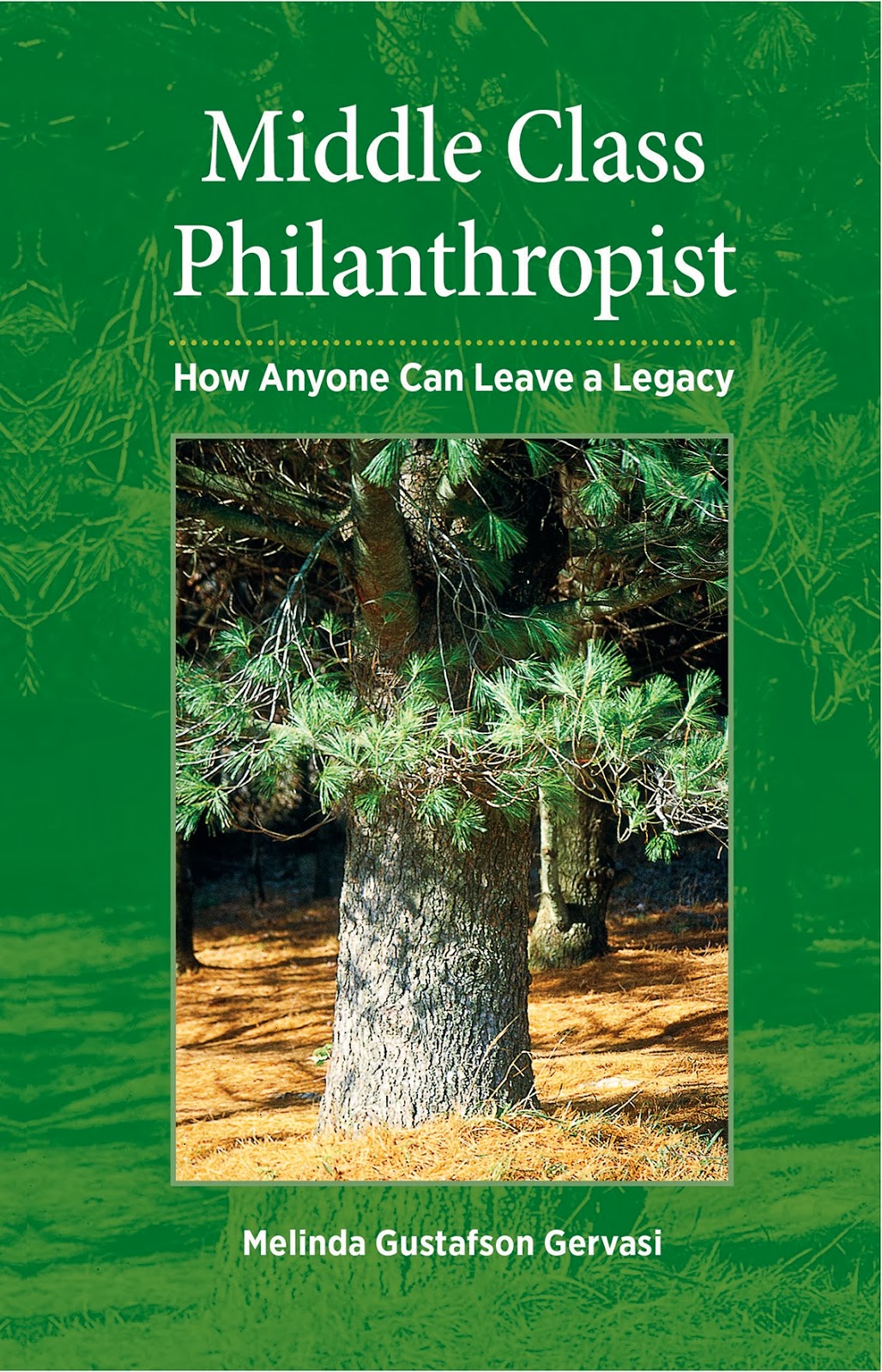
Predating democracy, capitalism, organized religion, and as old as humanity itself, philanthropy exists because things often go wrong, and things can always be better. Current understanding of philanthropy focuses on images of gated estates and the means of Bill Gates or Oprah. Stereotypes continually reinforced in news reports – internet mogul leaves $5.3 million art museum! – or something along those lines. An academic review of the word philanthropy reveals it to be a noun meaning generous help or benevolence towards one's fellow man. Philanthropy is not an exclusive act of those with a seven-figure net worth, anyone can leave a legacy. Daily I work with clients in my estate planning and probate legal practice who make bequests to favored charities. My clients fall solidly into “the middle class”, yet they give, and those gifts make a difference in the world of a nonprofit. It was from those client meetings that the idea to write Middle Class Philanthropist: How...